
About Datacash

Datacash is a 501(c)(3) nonprofit educational organization dedicated to improving public understanding of personal data, digital privacy, and the data economy. Through educational resources, research, workshops, and public-interest tools, Datacash helps individuals understand the information they generate, how it is collected and used, and the choices available to them regarding their data.
Our Mission
Personal data is a complicated subject because technology, business models, scientific evidence, regulation, and everyday digital habits change over time. Information can come from service providers, researchers, government agencies, community organizations, and individuals, and those sources do not always answer the same question.
Datacash examines those pieces carefully and explains them in a form the public can use. We want people to understand what is known, what is uncertain, what a data-practice claim means, and how new evidence changes the picture.
Why Datacash Exists
The modern economy increasingly depends on data, while public understanding of that economy remains limited. People regularly encounter technologies and policies whose information practices are difficult to see or understand.
Datacash addresses this knowledge gap by making information about personal data accessible, understandable, and useful to the public. The central idea is that people deserve to understand what data is, how it works, how it affects them, and what choices they have.
Education, research, public-interest technology, and community outreach can work together to help people make informed decisions about their digital lives.
Who We Serve
Datacash serves the general public, including students, educators, families, community organizations, researchers, journalists, and people with limited technical knowledge.
Our resources explain personal data, digital privacy, and the data economy with enough context for people to understand their choices. Different audiences may need different examples, definitions, and learning formats.
The organization’s purpose is public understanding. People deserve clear information about the data systems they participate in.
What We Do
Our work combines public education, independent research, digital literacy, privacy resources, and public-interest tools. We explain the information people generate, how it is collected and used, and the choices available to them.
Depending on the subject, our educational work and research may examine:
- personal data people provide, generate, and have inferred about them
- data collection, tracking, sharing, retention, and privacy controls
- data brokers, information markets, and economic incentives
- artificial intelligence, profiles, recommendations, and automated decisions
- data rights, access requests, correction, deletion, and portability
- digital literacy for students, families, educators, and community organizations
- accessible public-interest tools and practical learning experiences
- research methods, evidence quality, public awareness, and emerging technology
Different questions require different methods. A privacy notice, an account control, an algorithmic claim, a public dataset, or a regulatory development may require different evidence. The common standard is to explain the method, the limits, and the facts supporting the explanation.
Public Education
Datacash exists to make the world of personal data understandable and accessible. People should not need a technical background to learn what information they generate and how digital systems use it.
Educational resources can include plain-language guides, online lessons, workshops, seminars, visual explanations, and practical exercises for schools, universities, libraries, families, and community organizations.
We connect unfamiliar terms to everyday activities and explain both useful choices and important limitations. The aim is public understanding rather than pressure to use a particular service.
Public-Interest Research
Datacash’s public-interest research can examine how information is collected, categorized, combined, shared, and used. Relevant subjects include data brokers, digital privacy, artificial intelligence, consumer awareness, and public attitudes toward technology.
Research should begin with a clear question and an appropriate method. Findings need context about sources, sample selection, definitions, uncertainty, and any groups or conditions that are not represented.
Results can be made available through reports, articles, datasets, educational materials, and other publications. The public should be able to understand how a finding was reached and what it can reasonably support.
Data Analysis, Comparisons, and Learning Guides
Analysis helps the public understand how digital services and data practices differ. We use explainers, comparisons, and learning guides to examine collection, sharing, retention, account controls, accessibility, and the tradeoffs that can be difficult to see in a short policy statement.
When we compare practices or tools, the purpose is to make the reasoning visible. We explain the criteria, identify meaningful differences, and show the limits of the information available. A recommendation should be an educational conclusion supported by evidence.
Services, evidence, settings, and regulations change. We update resources when those changes materially affect the explanation or the choices available to readers.
Direct comparisons are useful when services appear similar. Putting their purposes, permissions, data flows, retention, and controls side by side can show whether a difference is meaningful.
Public-Interest Tools and Testing
Testing can help turn a question about a digital tool or control into an observation people can understand. Educational checks may examine account settings, permission requests, data exports, accessibility, or the usability of a privacy choice.
We define the question, record the relevant version and conditions, and distinguish direct observations from provider statements. Tests should use fictional information or the minimum information needed for the learning purpose.
A test does not reveal every part of a service’s internal systems. When access, time, or available evidence limits a conclusion, that limitation belongs alongside the result.
Digital Privacy and Safety
Digital privacy education helps people recognize unnecessary information requests, understand account controls, and make more informed decisions about sharing and access. It should explain the purpose and limits of a protection rather than promise complete anonymity or security.
Topics can include app permissions, account recovery, connected services, personal-data exposure, identity information, and safe handling of account archives. Practical guidance should be understandable and appropriate to the reader’s circumstances.
When a question requires individualized legal or security advice, an educational resource should make that boundary clear and point readers toward appropriate official information.
Youth Access and Digital Literacy
Students, families, and educators are part of the public Datacash aims to serve. Age-appropriate digital literacy can help young people understand personal information, online tracking, privacy choices, and responsible participation in digital life.
Learning activities should use accessible language and examples suited to the audience. Fictional records can explain a concept without exposing a child’s real accounts, location, or other personal information.
Any collection of information in an educational activity must use appropriate safeguards and follow applicable requirements. Public learning materials and participation that collects information are different activities.
Technology, the Data Economy, and Regulation
Technology announcements, company policies, research, and regulation affect how people interact with data systems. Datacash explains those developments with attention to dates, jurisdiction, and practical meaning.
An announcement is different from an available feature, and a proposed rule is different from an effective legal requirement. Coverage should make those distinctions visible and link to appropriate primary sources.
Economic context matters too. Understanding advertising, data brokers, information markets, and service business models can help people see why information is collected and how incentives shape digital experiences.
Our Approach
We start with practical questions: what information is involved, how it is collected, who can use it, what can be inferred, and which choices are available.
We examine appropriate evidence, explain unfamiliar terms, and connect concepts to everyday experiences. We distinguish documented practices, direct observations, research findings, and interpretations.
The result should be useful to someone learning about the subject for the first time while retaining the sources and limitations needed for closer examination.
Free Public Access
Financial circumstances should not determine access to basic education about the data economy. Datacash’s public educational resources are intended to help people understand digital systems without requiring specialist knowledge.
Free access can support students, educators, families, libraries, community organizations, researchers, journalists, and people seeking practical explanations of personal data and privacy.
Accessibility also involves clear language, usable formats, readable layouts, and consideration of different devices and abilities. A resource is most useful when people can understand and apply it.
Our Editorial Independence
Public education depends on evidence that readers can examine. Our editorial choices follow the nonprofit mission, the question being answered, and the strength of the available information.
Donors, sponsors, advertisers, service providers, and other outside parties do not purchase research findings or editorial conclusions. Material support and relationships should be disclosed where they are relevant.
We explain uncertainties and correct errors. A resource should remain open to revision when better evidence or changed circumstances affect its conclusions.
Working With Technology and Data Organizations
Understanding data practices can require asking service providers and technology companies for documentation, statements, technical explanations, corrections, or answers to questions raised during research.
We may also work with researchers, universities, libraries, educators, regulatory professionals, community organizations, journalists, and other qualified parties when their expertise helps answer a public-interest question.
Access is not approval. Receiving research access or speaking with an organization does not guarantee favorable coverage. When a relationship is material to the educational work, we disclose it.
Board of Directors
Our Editorial Team
Datacash contributors bring together research, fact checking, digital literacy, privacy education, community learning, and nonprofit operations. Their work supports public understanding of personal data and the data economy.

Devo Wright supports Datacash’s educational work on public education, research standards, and Datacash’s mission.

Amy Chen supports Datacash’s educational work on source verification, data-practice claims, and clear explanations.

Matt Wong supports Datacash’s educational work on nonprofit operations, financial transparency, and community relationships.

Jordan Ellis
Digital Privacy Educator
Jordan Ellis supports Datacash’s educational work on account controls, app permissions, and everyday privacy choices.
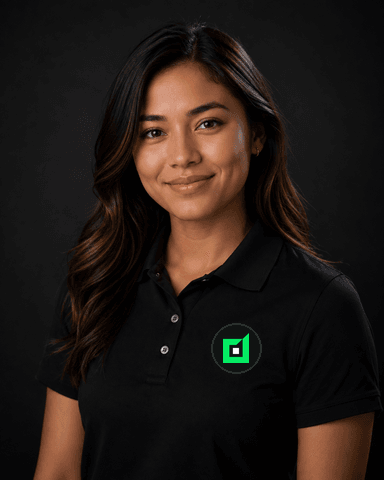
Sofia Ramirez
Connected Devices Researcher
Sofia Ramirez supports Datacash’s educational work on sensors, connected devices, software support, and data collection.

Noah Brooks
Data Rights Researcher
Noah Brooks supports Datacash’s educational work on access requests, portability, export formats, and account records.

Maya Patel
Digital Literacy Editor
Maya Patel supports Datacash’s educational work on beginner resources, accessible explanations, and learning guides.

Ethan Miller
Public-Interest Tools Researcher
Ethan Miller supports Datacash’s educational work on educational tools, usability, permissions, and documented methods.

Priya Shah
Fact Checker
Priya Shah supports Datacash’s educational work on primary sources, policy dates, legal context, and research limitations.

Caleb Turner
Data Economy Analyst
Caleb Turner supports Datacash’s educational work on data brokers, business models, economic incentives, and access.

Olivia Hart
Data and Algorithms Educator
Olivia Hart supports Datacash’s educational work on profiles, recommendations, inference, and automated decisions.

Marcus Lee
Research and Policy Editor
Marcus Lee supports Datacash’s educational work on technology announcements, digital policy, and emerging research.
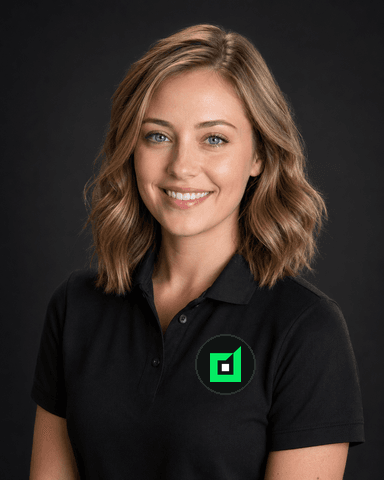
Claire Donovan
Editorial Operations Coordinator
Claire Donovan supports Datacash’s educational work on publication schedules, corrections, accessibility, and resource updates.

Tessa Kim
Community Learning Coordinator
Tessa Kim supports Datacash’s educational work on workshops, practical worksheets, and public-interest learning tools.
Public Education and Responsible Context
Datacash serves the general public, including students, educators, families, libraries, and community organizations. Examples should be appropriate to their audience and accessible to people with different levels of technical experience.
We respect personal information and use fictional examples where practical. Public discussions should not expose account records, credentials, or identifying information about someone else.
Resources support understanding and informed choices. They do not promise payments for personal information, guaranteed privacy outcomes, or individualized legal advice.
Corrections and Updates
We correct factual errors and update resources when new evidence or changed circumstances materially affect the explanation. Corrections and updates should be clear enough for readers to follow.
Send a page address, the statement at issue, and a supporting source to support@datacash.app.
See our Corrections Policy and Methodology for the standards behind this work.
Our Commitment
Datacash is committed to accessible public education, evidence-based explanation, respect for personal information, and independence in research and editorial decisions.
We aim to make complex systems easier to understand without hiding uncertainty or overstating what a tool, setting, or study can establish.
Our long-term goal is a public better equipped to understand the role data plays in society and to participate thoughtfully in digital life.
Nonprofit Status and Transparency
Datacash is a 501(c)(3) nonprofit educational organization. Our organizational details, public records, and information about support are collected here.
Organization Details
- Nonprofit
- Datacash
- Address
- 6650 Rivers Ave, North Charleston, SC, 29405
- Phone
- +1-843-996-7780
- support@datacash.app
- Website
- datacash.app
- EIN
- 41-2520862
- DUNS Number
- 144888707
Donations and Support
Public-interest research, education, tools, and publishing require resources. Source materials and research access may need to be obtained, educational tools require development and maintenance, specialists may need to be consulted, and public resources must remain available.
Support may come from individuals, foundations, grants, organizations, institutional partners, sponsorships, and other lawful sources that fit the nonprofit mission. Funding can support data literacy, privacy education, public-interest research, community workshops, accessible resources, and Datacash’s day-to-day operations.
Support funds the work; it does not purchase the finding. Donors, sponsors, advertisers, technology providers, and other outside parties do not receive the right to dictate independent research or editorial conclusions.
Transparency
We explain how the organization works through staff information, published editorial standards, correction policies, advertising and partnership disclosures, and rules for research access and outside support.
When an important error is identified, we correct it. When new information materially changes an explanation, we update it. When research methods improve, the methodology can improve too.
Transparency means showing readers what changed, why it changed, and which standards guide the work.
Read our Ownership and Funding information, Editorial Policy, and Advertising Disclosure.
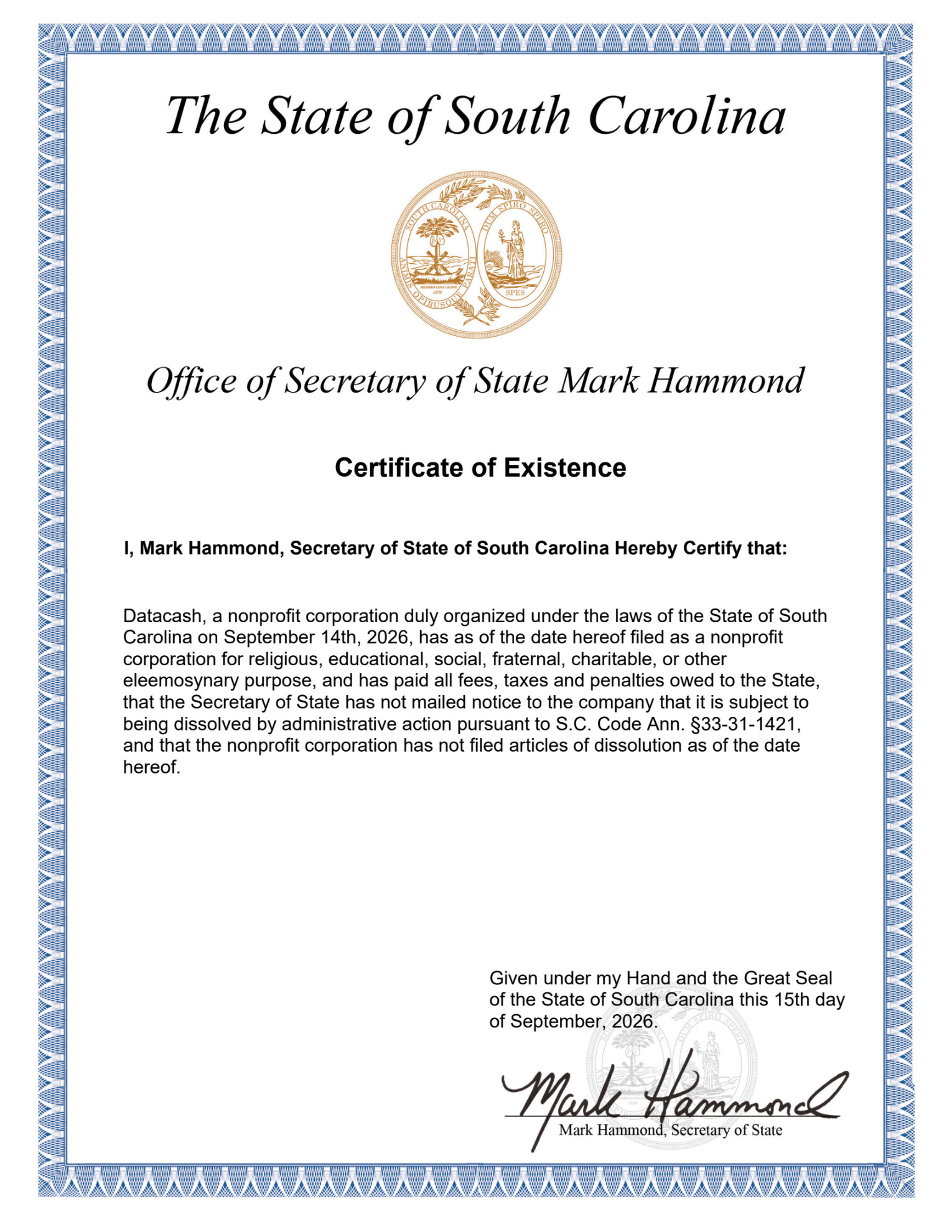
Certificate of Existence
Datacash maintains the organizational records associated with its nonprofit work. The certificate of existence supplied with those records is displayed below.
We retain the supplied certificate document so readers can inspect the state record directly. Organizational documentation is part of the information available about the nonprofit.
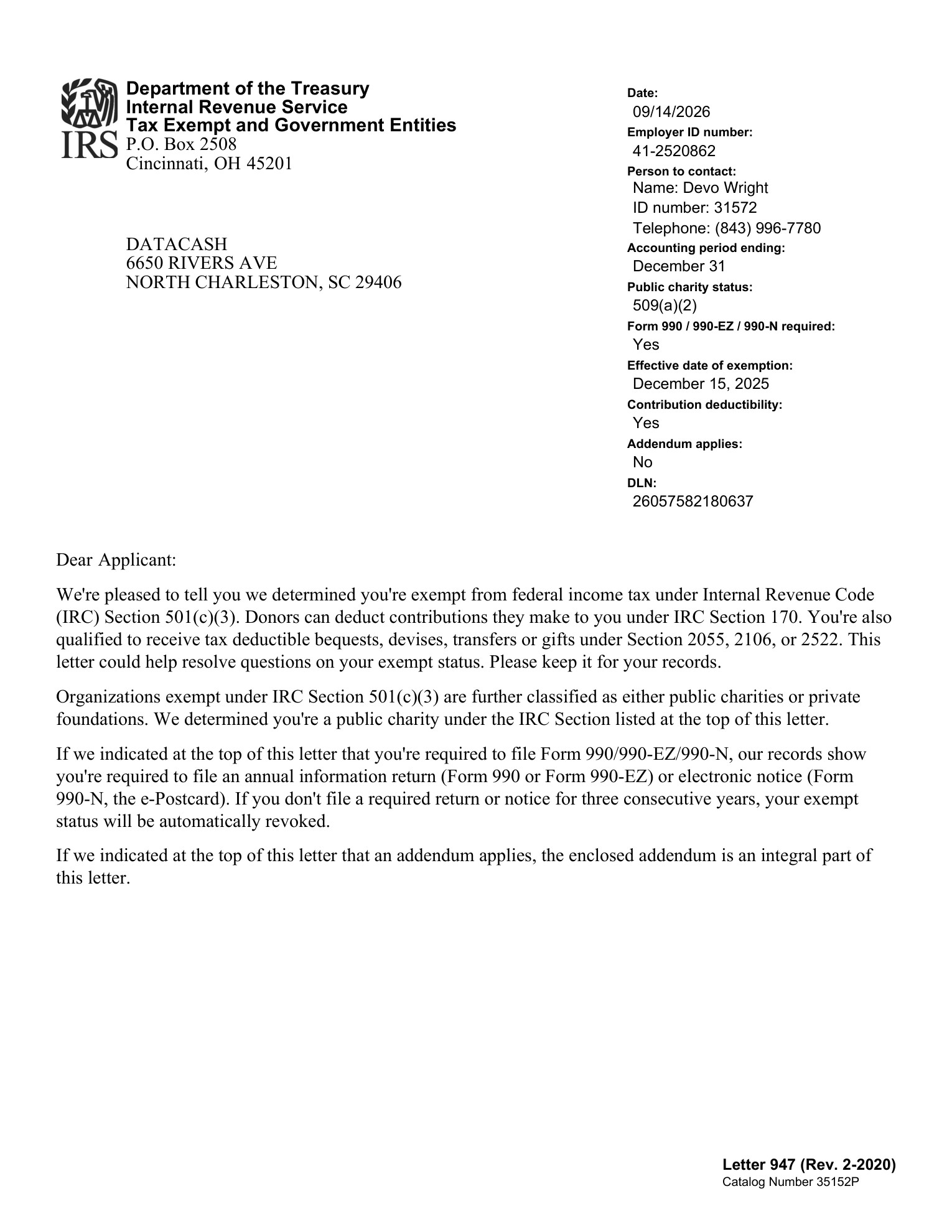
IRS Determination Letter
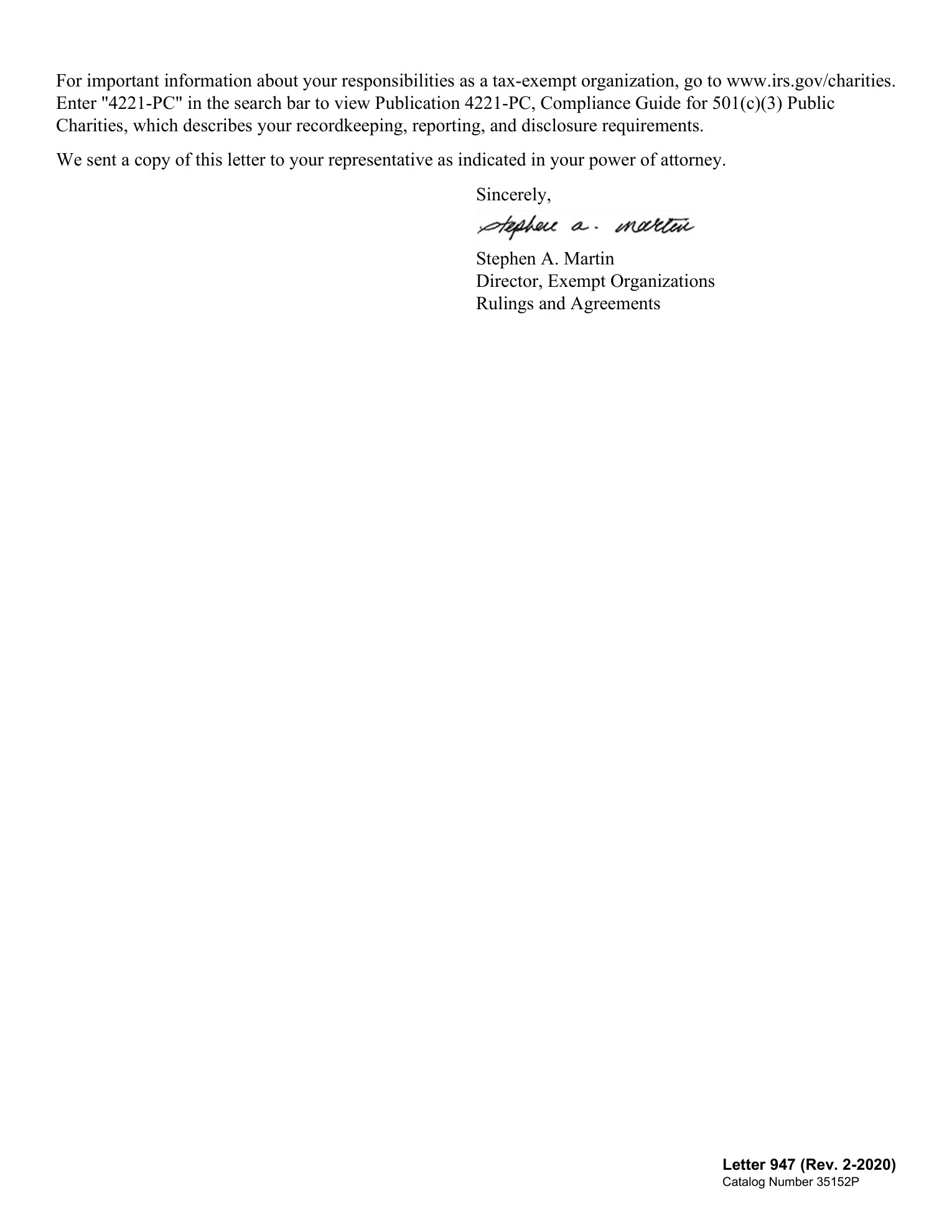
Datacash is recognized as a tax-exempt nonprofit organization under section 501(c)(3). The IRS determination letter is the federal document associated with that recognition.
That status provides the organizational framework for our public education, research, digital literacy, privacy education, public-interest tools, and community outreach.
The IRS determination letter dated September 14, 2026, is displayed below. View page 1 at full size or view page 2 at full size.
For other organizational records, contact Datacash and identify the document you need.
Contact Datacash
Contact Datacash about education, research, corrections, accessibility, organizational information, or contributor inquiries.
Datacash is a South Carolina 501(c)(3) nonprofit educational organization located at 6650 Rivers Ave, North Charleston, SC 29405. Our Employer Identification Number (EIN) is 41-2520862, and our DUNS number is 144888707. Reach us by email at support@datacash.app or by phone at +1-843-996-7780. Our official website is datacash.app, and our social media handle is @datacashapp.
Our Social Media Presence
Our official website is datacash.app and our social handle is @datacashapp. Our Social directory brings platform links together.
Social content introduces concepts, visual explanations, questions, and educational resources. Full articles provide source context, definitions, and limitations.